

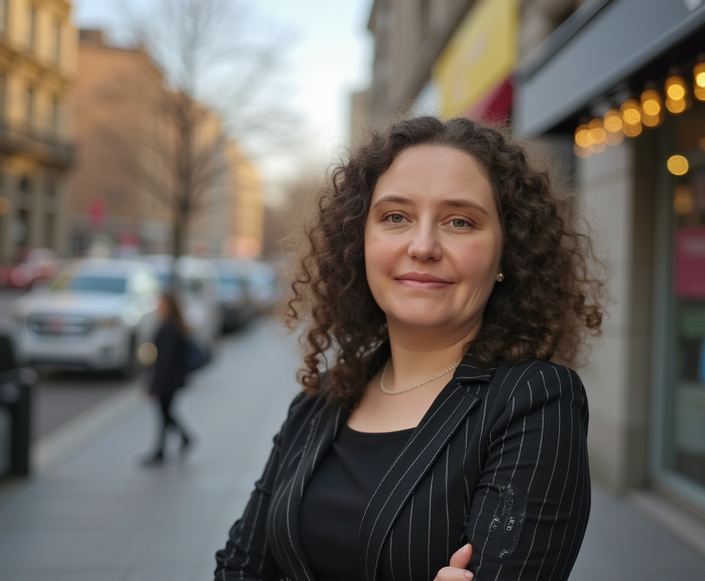
Louise Wilson
Louise Wilson has over 17 years of experience in oil and gas, having worked for BP and Shell as a process engineer, process safety engineer and technical safety manager before founding PSM Hub. She has been on every side of the HAZOP table — as team member, as the person commissioning the study, and as independent facilitator — with over 400 days of HAZOP and LOPA experience across diverse onshore and offshore environments.
She delivers HAZOP and LOPA training for the IChemE and teaches at Cambridge and Imperial College. She is a Chartered Engineer, Professional Process Safety Engineer, Certified Functional Safety Expert, Fellow and President of the Safety and Reliability Society, and Process Safety Lead on the IChemE Learned Society Committee.
LOPA Demonstration
In some cases identification and qualitative assessment of risks is not sufficient. This is primarily true for high severity consequences. It can be incredibly difficult for a person to evaluate the likelihood of a high severity happening at their facility. In addition, the assumption will be made that the safeguards present are standard or in many cases it is assumed they are better than other facilities (thereby reducing the likelihood of potential incidents). Often in HAZOPs and HAZID studies safeguards are listed which are not independent meaning that the likelihood is artificially reduced or a false sense of security is achieved.
To combat this a semi-quantitative methodology called Layers of Protection Analysis (LOPA) is used to more systematically assess the high severity scenarios for the adequacy of safeguards. This when completed well provides a consistent approach to evaluate risks and provide safeguarding consistently across an organisation. This helps to ensure that some projects (who may be led by risk averse individuals) do not over-engineer facilities making it too complicated to operate and other projects (who may be led by risk takers or more susceptible to budget pressures) do not under-engineer the solution leaving the facility open to high operating risk.
This sounds like a golden solution however it is still easy to fall into the traps mentioned above however with even more confidence (you know have a number to back you up) as well as other traps. Join us on this course to learn how you can make this methodology work for you.
LOPA Foundations
- M1: What is a LOPA study? (30:49)
- M2: Why should you employ LOPA? (8:44)
- M3: When should you employ LOPA? (4:21)
- M4: Who should be present at the LOPA? (3:21)
- M5: Where does LOPA fit into the Safety Lifecycle? (2:54)
- M6: How to make the LOPA study a success from preparation to action closure? (8:47)
- M7: LOPA Study Worked Example (114:56)
Testimonials
'Good value, and efficient presentation of how to put LOPA into practice'
'Louise proved to be very clear in her communication and explanation during the LOPA course.'
Here are some other courses you may be interested in
NOTE attending the HAZOP course is a pre-requisite of the the LOPA course


Frequently Asked Questions:
Do I need any prior process safety experience? No. HAZOP Foundations starts from the basics and builds up, so beginners can start there confidently. LOPA Foundations builds on HAZOP knowledge, so taking the courses in order gives you the strongest foundation.
How long will it take me to complete both courses? Approximately 6.5 hours of total video content across the two courses. Most people complete the bundle in 2-4 sittings at their own pace. There is no deadline — work through the material whenever suits you.
Do I get certificates for both courses? Yes. You receive a separate Certificate of Completion for each course, each with CPD hours. Complete the quiz and feedback for each course to unlock the certificate.
How long do I have access? Lifetime access to both courses. Come back and refresh whenever you need to — before your next HAZOP, before a revalidation, or whenever you want.
What's the difference between HAZOP and LOPA? HAZOP identifies hazards and operability problems through systematic examination of process deviations. LOPA evaluates whether the safeguards you have or propose are sufficient to manage the risk. HAZOP tells you what can go wrong. LOPA tells you if your protection is enough. Most robust process safety programmes use both.
Should I take HAZOP first or LOPA first? Take HAZOP Foundations first. LOPA builds on HAZOP knowledge and assumes you understand how hazards are identified and documented. The bundle is designed for this sequence.
Can I buy just one course instead? Yes — HAZOP Foundations and LOPA are also available individually at £100 and £99 respectively. The bundle saves you £20 if you want both.